Your Blood Sugar Tells a Story. Read It in Real Time.
A continuous glucose monitor tracks your glucose every few minutes — revealing how your body responds to food, sleep, stress, and exercise in a way no single blood test ever could.
A window into your metabolism that never closes.
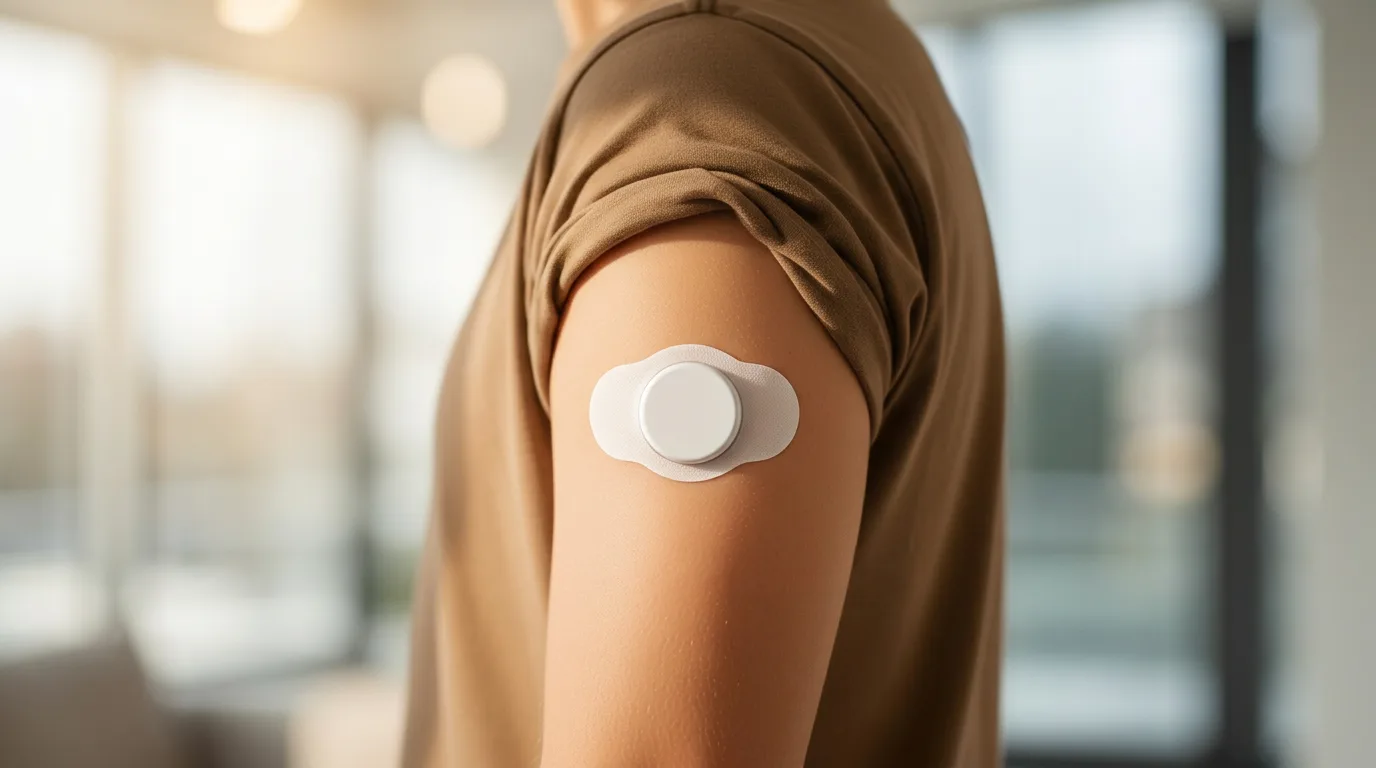
A CGM is a small sensor worn on the back of the arm that reads your glucose every 5 minutes — around the clock — and sends data to your phone. At Mend, we prescribe it for a structured 2-week period to establish your metabolic baseline.
Unlike A1c or fasting glucose, which give you a single number, CGM shows the full story: how fast glucose rises after meals, whether it returns to baseline, and how sleep and stress shape your metabolism overnight.
Prescribed Medical-Grade Sensor
FDA-cleared continuous glucose monitor. Applied once, worn 14 days, syncs automatically to your phone. Water-resistant, discreet, and painless after insertion.
Glucose readings per day vs one from a standard blood draw
Of people with normal A1c still spike into the prediabetic range on CGM*
Between readings — continuous, real-time, no finger pricks
Standard wear period at Mend to capture a complete metabolic picture
*Hall et al., Cell Metabolism 2018 — normoglycemic participants, CGM study.
The three numbers that matter
Your practitioner uses these metrics to interpret your trace and build your protocol.
Your target zone
The percentage of the day your glucose stays within range. Metabolically healthy adults aim for 90%+. This single metric captures what no snapshot test can.
↑ Improve with: consistent meal timing, post-meal walks, protein-forward meals
How stable your levels are
How wildly glucose swings day-to-day. High variability — even within 'normal' ranges — is associated with cardiovascular risk and accelerated biological aging.
↑ Linked to: sleep quality, stress, food order within meals
Return to baseline in <2 hrs
The same meal produces dramatically different responses in different people. This is where CGM reveals what no standardized test can predict.
↑ Individual responses vary by: gut microbiome, stress, sleep, meal composition
Two weeks of data reveals what years of labs missed
CGM reflects back the real-world impact of every choice you make.
Your Personal Food Response
Two people eating the same meal can spike completely differently — CGM shows which foods are a problem for your biology specifically.
Sleep & Overnight Glucose
Poor sleep raises next-morning glucose — CGM captures what's happening while you're unconscious, data no standard test can provide.
Meal Timing Matters
The same meal eaten at 7pm vs 9pm produces different glucose peaks — front-loading calories earlier consistently improves regulation.
Exercise & Glucose
A 10-minute post-meal walk can blunt a glucose spike by 30–40% — CGM is the best biofeedback tool for optimizing when and how you move.
Stress & Cortisol Spikes
Stress raises cortisol, which raises glucose — even without eating. CGM makes the stress-metabolism connection impossible to ignore.
Early Metabolic Warning Signs
Normal A1c can mask prolonged spikes and slow glucose return — CGM surfaces these patterns years before a lab test flags them.
Of people with a normal A1c still spend meaningful time above the prediabetic threshold on CGM
A1c gives you an average. CGM gives you the truth.
A person who spikes to 200 every afternoon can have a perfectly "normal" A1c. CGM reveals what that average conceals — and that's exactly where metabolic risk hides.
Prescribed. Worn. Reviewed.
Consult & Prescribe
Your Mend practitioner reviews your metabolic goals and prescribes the sensor — shipped directly to you or dispensed at the clinic.
Telehealth eligible — all AZWear for 2 Weeks
Apply to the back of your arm. It syncs to your phone every 5 minutes, 24 hours a day — water-resistant, discreet, painless after insertion.
288 readings per dayPractitioner Data Review
Your practitioner analyzes your full glucose trace and builds a targeted plan around your dietary triggers, patterns, and metabolic vulnerabilities.
Actionable, personalized protocolAssociated Conditions
CGM may provide clinically useful data in management or monitoring of all of the following
FAQ
Common Questions
14-day continuous glucose monitoring is included as part of the Advanced Physical, MEND's most comprehensive one-time evaluation.
Related Testing
Diagnostics Often Ordered Together
See Your Metabolism the Way It Actually Behaves.
Two weeks. 288 readings a day. A practitioner-reviewed plan built around what your glucose data actually shows.