Flagstaff, Arizona · Statewide telehealth
Cardiovascular Risk Deserves More Than a Lipid Panel
Advanced biomarkers, coronary imaging, vascular screening, and functional testing for Flagstaff patients and Arizona telehealth clients.
Standard screening
was designed to catch
disease — not prevent it.
A conventional lipid panel measures total cholesterol, LDL, HDL, and triglycerides. It does not show particle number, genetic risk, vascular inflammation, or whether plaque is already forming.
Cardiovascular disease is often preventable when risk is found early. We use layered testing: biomarkers to quantify risk, imaging to assess plaque, and functional testing to see how your heart performs under stress.
The Numbers Standard Panels Miss
These biomarkers reveal risk that total cholesterol and LDL alone can miss.
Apolipoprotein B (ApoB)
The best single blood marker for atherogenic risk. ApoB counts the particles that can enter and damage the arterial wall, which LDL-C often misses.
Why it matters: Many patients with 'normal' LDL still have elevated ApoB. It is increasingly used as a primary treatment target.
Lipoprotein(a) — Lp(a)
A genetically driven lipoprotein tied to higher cardiovascular and stroke risk. Lp(a) is largely set by DNA and is rarely checked.
Why it matters: Elevated Lp(a) affects about 1 in 5 people and can change lifelong risk planning.
Advanced Lipid Panel (NMR)
NMR measures lipoprotein particle number and size, not just cholesterol concentration. It helps distinguish more atherogenic small dense LDL from larger particles.
Why it matters: Two people can share the same LDL-C and have very different particle-driven risk.
High-Sensitivity CRP (hs-CRP)
Measures systemic vascular inflammation, an independent predictor of cardiovascular events. It can stay elevated even when cholesterol looks acceptable.
Why it matters: Elevated hs-CRP can signal meaningful risk even when standard lipids look normal.
Lp-PLA2 (PLAC Test)
Unlike hs-CRP, Lp-PLA2 is more specific to vascular wall inflammation. Elevated levels can point to active, higher-risk plaque.
Why it matters: Helps identify patients with more unstable plaque biology.
Homocysteine
An amino acid linked to endothelial injury, atherosclerosis, and clotting risk. Elevated levels often reflect methylation or B-vitamin issues.
Why it matters: Often modifiable with targeted nutritional and methylation support.
Oxidized LDL (oxLDL)
Oxidized LDL reflects LDL that has become more damaging inside the arterial wall. Standard LDL-C does not capture this process.
Myeloperoxidase (MPO)
An enzyme released by white blood cells in vulnerable plaque. Elevated MPO can suggest plaque instability.
Fasting Insulin & HOMA-IR
Insulin resistance is a major cardiovascular driver and often appears years before diabetes. Fasting insulin and HOMA-IR can catch it early.
See What Blood Work Cannot
Biomarkers estimate risk. Imaging shows what may already be happening inside your arteries.
CT Coronary Calcium Score (CAC)
A low-dose CT that measures calcified plaque in the coronary arteries. A score of zero is reassuring; an elevated score can meaningfully change prevention planning.
Clinical impact: CAC can meaningfully reclassify risk, especially in patients who fall into the gray zone.
Coordinated through local imaging. Fees pass through at cost.
CT Coronary Angiogram (CTA)
When deeper imaging is needed, CTA visualizes the coronary arteries directly, including soft plaque, stenosis, and anatomy that CAC alone cannot show.
Clinical impact: Best reserved for patients whose CAC, symptoms, or risk profile warrant a closer look.
Coordinated through local imaging. Fees pass through at cost.
Carotid Intima-Media Thickness (CIMT)
An ultrasound measure of carotid artery wall thickness. It offers a non-invasive view of early vascular change and can be repeated over time.
Clinical impact: No radiation and useful for serial tracking.
Coordinated through local imaging or vascular labs. Fees pass through at cost.
Ankle-Brachial Index (ABI)
A simple ratio of ankle-to-arm blood pressure. An abnormal ABI can reveal peripheral arterial disease and broader vascular risk.
Clinical impact: Quick, non-invasive, and often overlooked in standard workups.
Echocardiography
Ultrasound imaging of heart structure and function, including chambers, valves, wall thickness, and ejection fraction. It helps identify structural disease blood work cannot show.
Clinical impact: Useful when symptoms, hypertension, or family history point to structural evaluation.
Coordinated through local cardiology. Fees pass through at cost.
How Your Heart Performs Under Load
Imaging shows structure. Functional testing shows how your cardiovascular system performs under load.
VO2 Max Testing (CPET)
Cardiopulmonary exercise testing measures maximal oxygen uptake. VO2 max is one of the strongest markers of cardiorespiratory fitness and longevity.
Clinical impact: Helps guide exercise prescription and track meaningful fitness change over time.
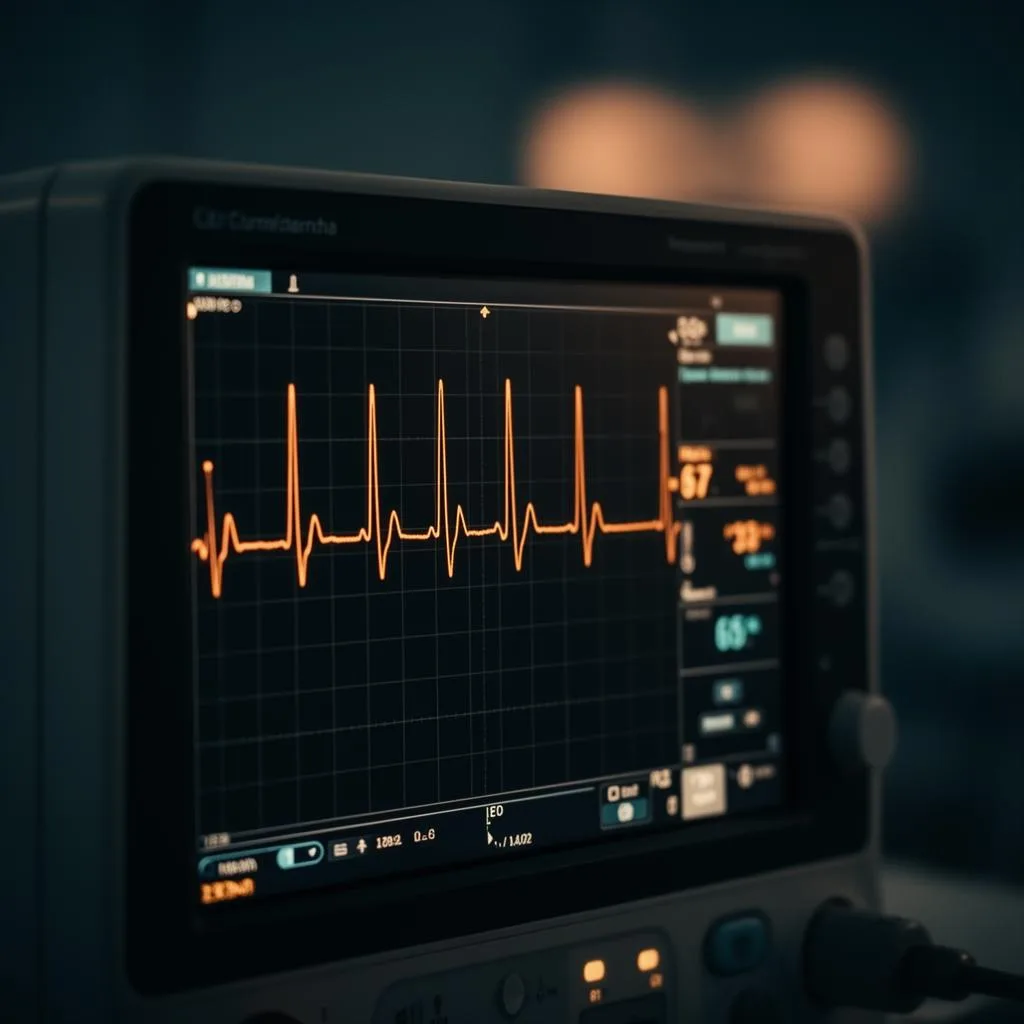
Exercise Stress Test (Stress ECG)
Monitors ECG, rhythm, blood pressure response, and symptoms during graded exercise. It can reveal ischemia or arrhythmias missed at rest.
Clinical impact: Useful for exertional symptoms, blood pressure response, recovery, and overall risk assessment.
Stress Echo & Nuclear Perfusion
When a standard stress test is not enough, we coordinate stress echo or nuclear perfusion imaging to assess blood flow during peak demand.
Clinical impact: Adds sensitivity when the clinical picture calls for more than a standard stress ECG.
EndoPAT Testing
Measures endothelial function, the health of the inner lining of blood vessels. It can detect vascular dysfunction before structural plaque is obvious.
Clinical impact: Useful for early functional assessment and repeat tracking.
Cardiovascular Genetic Risk Panel
A one-time test for genetic variants tied to cardiovascular risk, including lipid disorders, clotting risk, and inherited cardiomyopathy patterns.
Clinical impact: Can justify earlier intervention and clarify risk beyond family history alone.
Layered, Sequenced, Interpreted
We build your cardiovascular workup in layers, starting with the most useful and least invasive tools first.
Biomarkers First
Advanced blood work helps define baseline risk and guides which imaging, if any, makes sense next.
Imaging When Indicated
Based on your biomarkers, history, and symptoms, we coordinate the right imaging with a clear clinical reason.
Protocol, Not Just Data
Every result is interpreted in context and translated into practical next steps for lipids, inflammation, exercise, and lifestyle.
Who benefits from
advanced screening
Not everyone needs every test, but many patients have risk that standard screening never uncovers.
- Family history of heart disease, stroke, or sudden cardiac death
- Patients on hormone therapy (TRT, BHRT) who want proactive cardiac monitoring
- Anyone with 'borderline' lipid results who wants a deeper risk picture
- Athletes and high performers who want to understand their true cardiac fitness
- Longevity-focused patients building a comprehensive prevention strategy
- Anyone over 40 who has never had advanced cardiovascular screening
How Members Access Cardiovascular Diagnostics
Available through either ongoing membership program below.
Hormone & Weight Loss Program
$149/moOngoing hormone optimization and medical weight loss care, with testosterone medication included in the Men's Hormone Program. Diagnostics like these can be ordered and reviewed with your clinician along the way.
Learn moreConcierge Primary Care
$329/moShawn as your primary care provider, with hormone optimization, medical weight loss, and medication included. Diagnostics like these are reviewed as part of your annual physical and ongoing care.
Learn moreFAQ
Common Questions
Advanced cardiovascular diagnostics are ordered when clinically appropriate for your risk profile and goals. Imaging and functional testing are coordinated through partner facilities, with fees billed directly by the facility. Availability may vary by location. These services are not a substitute for emergency cardiac care. For chest pain or acute cardiac symptoms, call 911 immediately.
Related Testing
Diagnostics Often Ordered Together
Know Your Risk Before It Becomes Your Diagnosis
Start with a free consultation to review your history, risk factors, and the right next-step diagnostics for you.